Track: Track 2
-
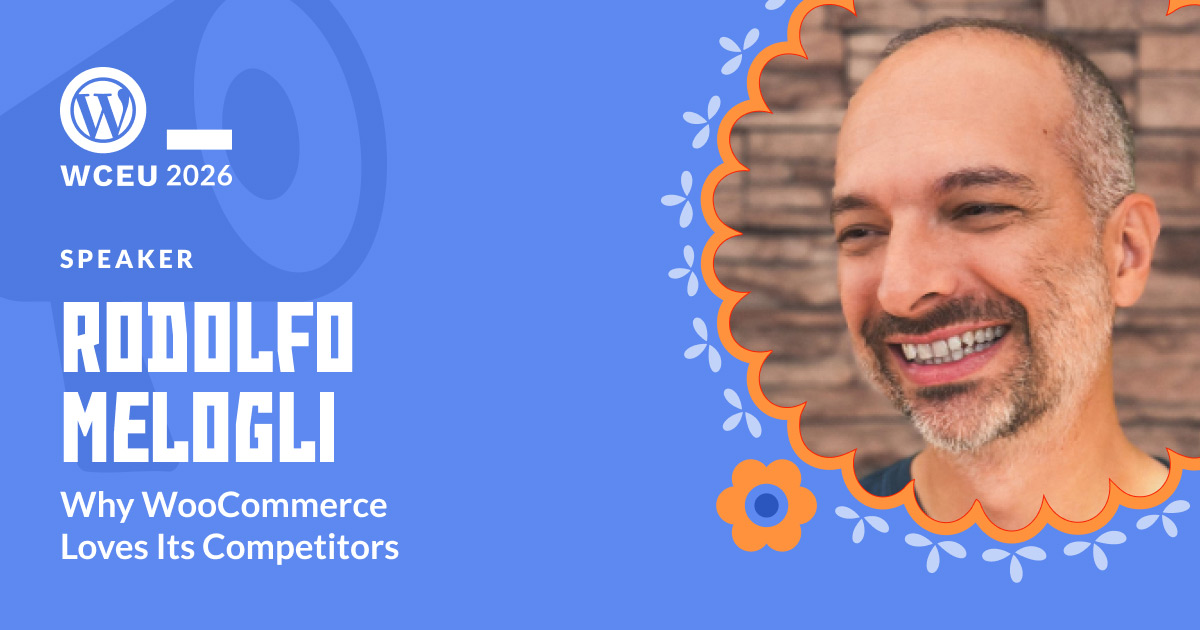
Why WooCommerce loves its competitors
Every time a new WordPress e-commerce plugin launches, the rumour mill predicts doom for WooCommerce. But the truth is the opposite: WooCommerce thrives when the ecosystem grows. This session reveals why internal competition is largely a myth and how collaboration is the real driver of success. We’ll look at examples of plugins coexisting and complementing…
-
Smarter plugin permissions with the Abilities API
Discover how the new Abilities API makes plugin permissions cleaner, safer, and easier to maintain. In just a few minutes, you’ll see how it differs from legacy capability checks, learn from a small code example, and get actionable tips you can take back to your own plugins.
-
Beyond hamburgers: latest Navigation block changes
Discover how the customisable navigation overlays transform mobile menu design. Learn what this new feature means for theme developers and see examples of creating theme-friendly, content-rich mobile navigation experiences using blocks and patterns.
-
Block bindings for all!
Block bindings have been available for a few versions of WP now but limited to a few core blocks and attributes, and further limited to post meta and synced patterns as a user facing tool. Now that bindable attributes and the UI can be extended there has never been a better time to get to…
-
Stress testing and scaling WordPress on a $12 VPS
From server crash to enterprise scale – a live-fire DevOps exercise. We’ll stress-test a WP stack on a $12 VPS, visualizing bottlenecks in Grafana before implementing a hybrid-static leap. GitHub repo included!
-
Secure-by-design: hardening plugins with PHP 8.x
In the WordPress ecosystem, we are often forced to choose between supporting the “lowest common denominator” of hosting and implementing modern security. But in 2026, writing legacy PHP 7 code isn’t just a bad habit, it’s an active invitation for automated exploitation. It’s time to stop playing “whack-a-mole” with sanitization and start building products that…
-
Fireside chat
WordCamp Europe 2026 in Kraków closed with a fireside chat between Mary Hubbard, Executive Director of WordPress, Matías Ventura, lead of the Gutenberg project, and Rich Tabor, a WordPress designer and developer. After a celebration of WordPress in education, including a new WordPress course launching this October at Kraków University of Technology, the three discuss…
-
The new engineer: psychology, systems, and open source
How do we educate students for an AI-disrupted IT market without endlessly chasing the next tool? This talk presents a practical model: combine durable soft skills with strong technical foundations, teach through real problems, and use open source – especially WordPress – as a “living lab” where students build, ship, and contribute through structured programs…
-
What it (really) means to be a part of the WP Credits program?
The WP Credits program is often described as a way for students to “learn WordPress while contributing to the community.” And, while this is all true – it’s not the whole story. In this talk, Ivana (a long-time marketer and WordPress professional, accepted mentor and someone deeply involved in this industry), will share her looks…